
Renting, Buying, and the Berkeley Being Built Around Us

Updated: Sep 23
By Nathan | Capital Bridge Partners
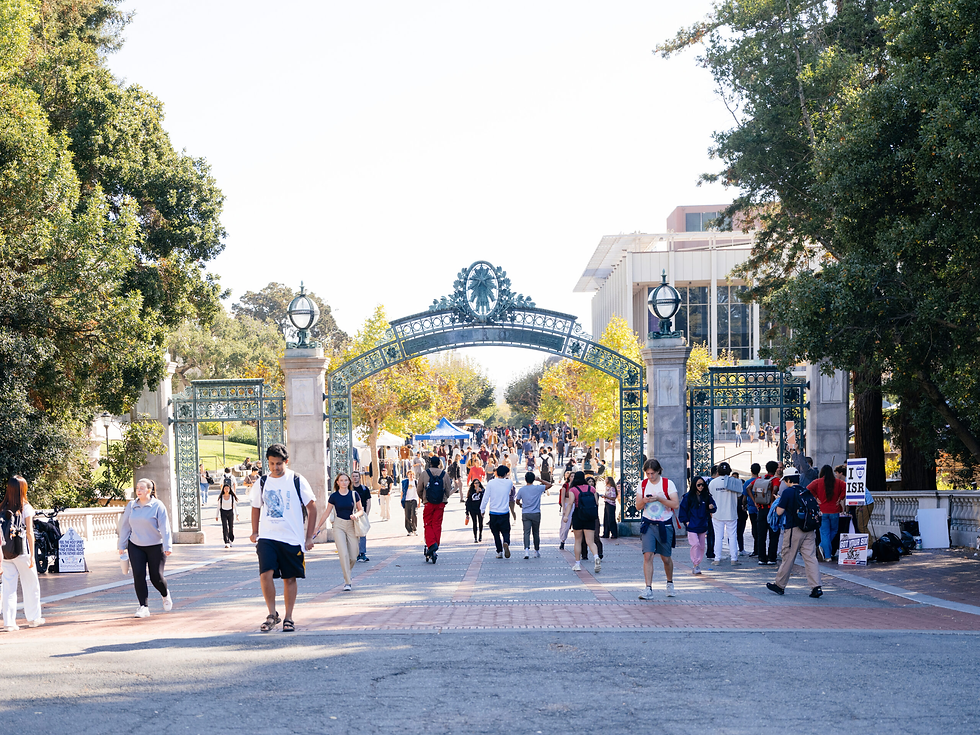
I signed my first Berkeley lease in January for an August move-in, and honestly, it felt ridiculous. Why was I committing to an apartment eight months early? By my third year, I was warning first-years that if they hadn’t started searching over winter break, they were already falling behind.
That’s the part no one tells you when searching for an apartment in Berkeley. It’s not just about price or location. It’s also about finding the right place at the right time, whether you want a single, a double, or a home to share with friends.
Most Southside and Northside apartments for the following August appear between October and February. The good ones can disappear within days. I learned that the hard way. Twice, I lost an apartment because someone else was ready to sign faster.
What eventually helped me wasn’t having a larger budget, but being prepared before every tour. I kept my proof of enrollment, my cosigner’s income information, and enough money for the deposit ready so that if I found a place I liked, I could move quickly and secure it before someone else did. There are also a few things worth doing before signing anything. Visit the block late at night because it can feel completely different than it does during an afternoon tour. Ask exactly which utilities you’ll need to pay. If you might leave Berkeley for a summer internship, get the subletting policy in writing. These details aren’t exciting, but they can save you from a miserable lease.
Here’s what surprised me most: Berkeley’s rental market may finally be shifting in favor of renters.
Berkeleyside analyzed city Rent Board data and found that rents for Berkeley’s older apartments have softened considerably. In the middle of 2025, new tenants renting older one-bedroom apartments paid a median of about $2,295 per month. Two summers earlier, that figure was closer to $2,600.
Zillow’s typical rent measurement tells a similar story. Since 2018, Berkeley rents have increased by only about 1.4 percent per year. Once inflation is considered, rents have been nearly flat.
Of course, no leasing office is going to volunteer that information while showing you an apartment. A major reason for the change is new housing. You can see it happening all over Berkeley, especially around Shattuck Avenue and Downtown. UC Berkeley has added roughly 2,400 beds since 2018, and more student housing is coming. Anchor House opened Downtown with 772 beds, while the xučyun ruwway complex in Albany added another 761. Two more projects scheduled to open in 2027 and 2028 are expected to add about 2,700 beds, including the 1,100-bed Heumann House.
That added capacity is already changing what the university can offer. Incoming first-year students in 2026 to 2027 now receive a two-year housing guarantee, while transfer students receive a one-year guarantee. The university currently houses around 9,700 of its 33,000 undergraduate students. A decade ago, that would have been hard to imagine.
The city is building too. In February, the City Council unanimously approved an eight-story, 110-unit building on Virginia Street. A 58-unit project on Dwight Way is already complete. The City Council also approved a proposed tower at Channing Way and Bowditch Street that could reach 26 stories and house up to 2,000 students. Berkeley is starting to feel more like a real city and less like a college town frozen in time. I think that’s a good thing. Every new apartment eventually competes with the landlord asking you to pay a premium for a walk-up with a kitchen that hasn’t been updated since the 1970s.
As I get closer to graduating, I have started thinking more about another housing question: renting versus buying. In Berkeley, this question has a much clearer answer than simply finding the right lease as a student. According to Redfin, Berkeley’s median home sale price is around $1.5 million, up 2.6 percent from the previous year. Homes sell in roughly 15 days and receive an average of six offers. Compared with typical monthly rent in the mid-$2,000s, buying becomes difficult to justify unless you plan to stay in Berkeley for the long term.
At the same time, Berkeley has taken steps to make building rental housing easier, particularly smaller multifamily developments. These changes support the argument that Berkeley’s rental housing supply could continue to increase even while traditional single-family housing remains constrained. Berkeley’s new Middle Housing zoning allows two- to six-unit developments, such as duplexes, triplexes, fourplexes, and courtyard apartments, in many residential neighborhoods. Projects that meet the city’s development standards can receive ministerial approval within 30 days and cannot be appealed to the Zoning Adjustments Board or City Council, significantly streamlining the development process. These changes do not guarantee that rents will fall, but they make it easier for developers and property owners to add housing units, which could gradually expand Berkeley’s rental supply.
Life will not get easy for Berkeley students anytime soon, but they can be confident that the real estate market seems to be heading in a more positive direction. Increased availability of rentals, along with slightly more tenant-friendly policies, may help avoid situations like mine in the future.
Sources
Berkeleyside. “Many Berkeley Rents Are Back to 2018 Prices. Is New Housing the Reason?” May 1, 2025.https://www.berkeleyside.org/2025/05/01/berkeley-housing-rent-prices-data
Redfin. “Berkeley, CA Housing Market.”https://www.redfin.com/city/1590/CA/Berkeley/housing-market
City of Berkeley. “Middle Housing Zoning.”https://berkeleyca.gov/construction-development/land-use-development/middle-housing-zoning
City of Berkeley. “Middle Housing Zoning: General Plan and Area Plans.”https://berkeleyca.gov/construction-development/land-use-development/general-plan-and-area-plans/middle-housing-zoning


Comments